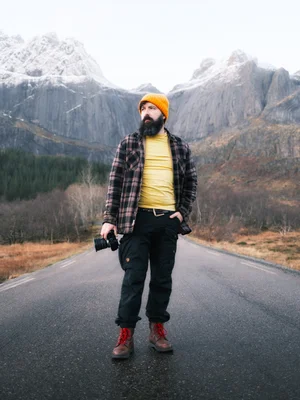
I Finally photographed the Patagonia Logo in El Chaltén
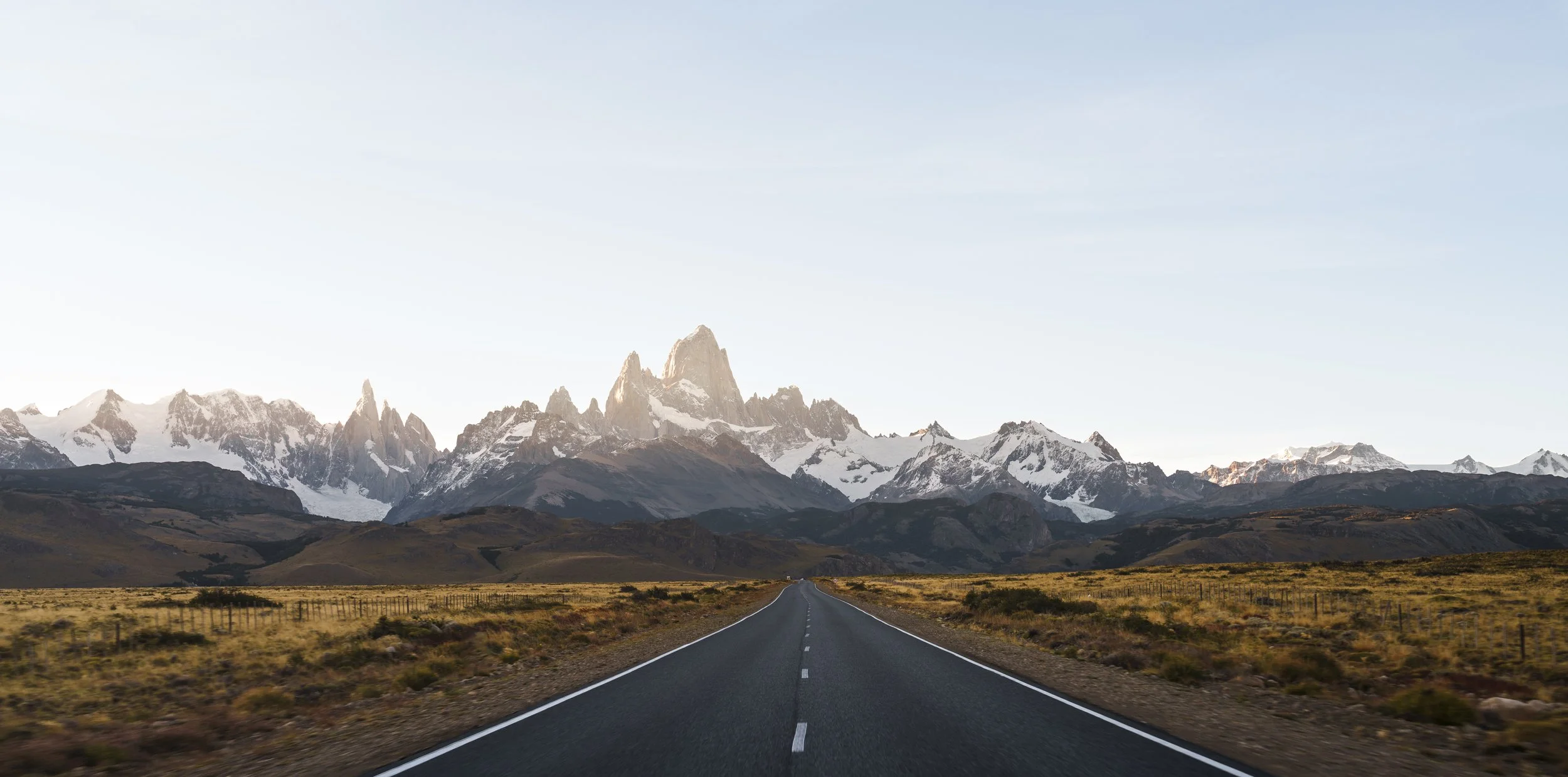
There are certain places you see so often, on social media, in adverts, even on clothing, that they stop feeling real. Fitz Roy was one of those for me.
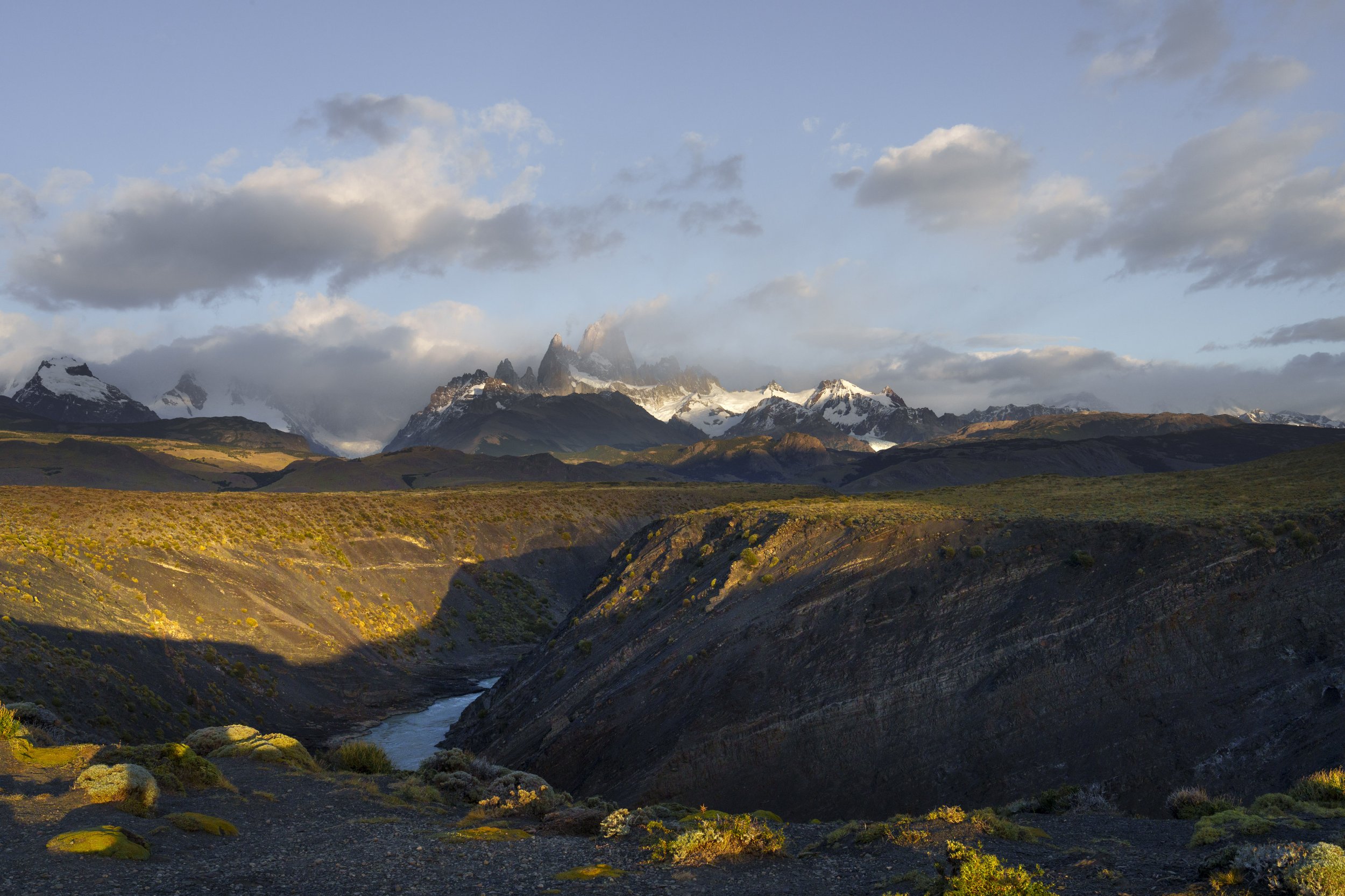
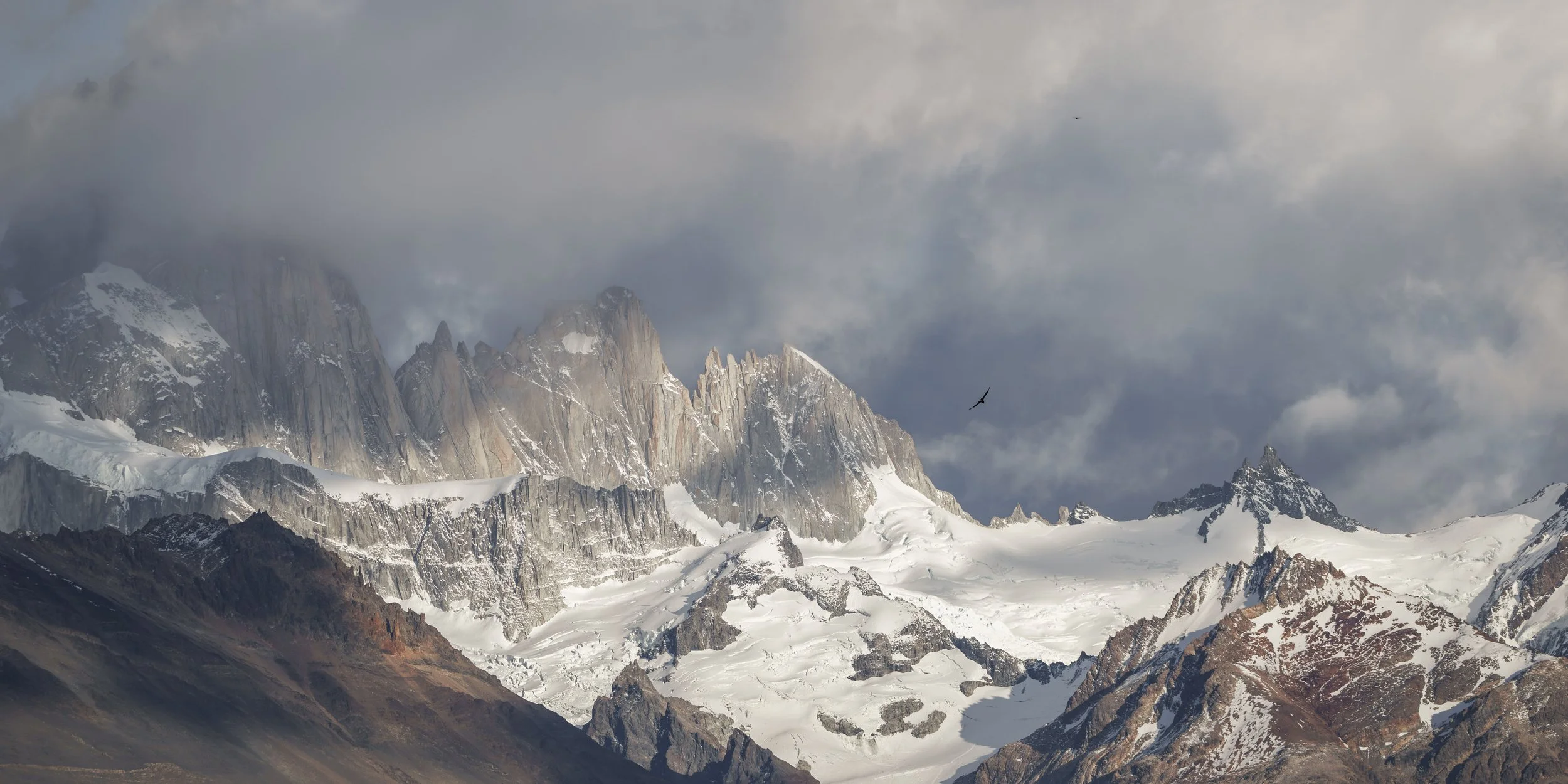
Half way on the drive from El Calafate to El Chaltén, we stopped for a break. In the distance through the desert haze was that jagged skyline in the distance. This was the mountain range I’d seen countless times before. The one stitched into the logo of Patagonia clothing. And now it was within telephoto distance in front of me.
After years of wanting to photograph it, I’d finally made it. The only problem? I was absolutely exhausted!!
From Antarctica to the Desert
That morning, we’d stepped off a ship after more than a week exploring Antarctica. Ice, snow, glaciers… and then suddenly, dust, wind, and dry, open landscape! It was a shock to the exhausted system to say the least.
The drive from El Calafate to El Chaltén takes a couple of hours, cutting through a surprisingly barren environment. It felt like a completely different world to the one we’d just left behind. I mean, they were both barren, but completely different! At one point, I even saw a tumbleweed roll across the road, always wanted to see that, it was like I was back in the cartoons I grew up with.
We didn’t stop much. We couldn’t. We just needed to get to the town, check in, find some food and rest. Most of my “photography” that day was done from the passenger seat. It’s become a theme on our road trips, Cas doesn’t like me driving on the other side of the road (although my driving is completely fine!!) which leaves me to play with the cameras and watch the world go by.
El Chaltén: A Town Built for the Mountains
El Chaltén itself is an interesting place. Founded relatively recently in 1985, it’s grown into what’s now known as Argentina’s trekking capital. It’s a basecamp town, built for hikers, climbers, and photographers all chasing the same thing: those mountains.
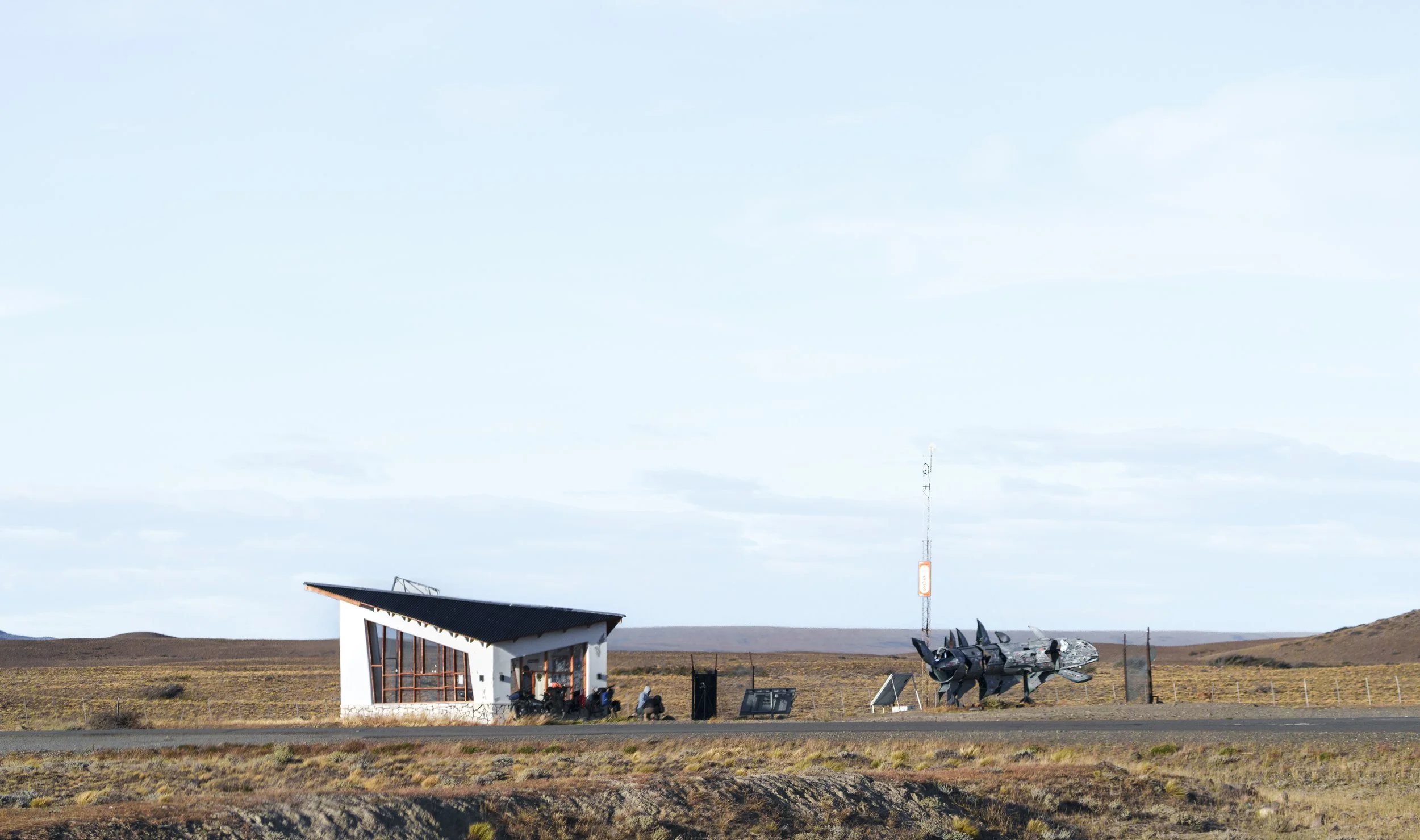
It’s also a place of contrasts. New buildings sit next to old, weathered structures. Modern cars parked alongside rusted relics that look like they’ve been there for decades. There’s construction everywhere as the town expands to meet demand, but it still feels remote.
We spent our first day just wandering. No pressure. No sunrise alarms. Just walking, taking photos of whatever caught my eye, street scenes, textures, little details. After Antarctica, I needed that reset!
And, if I’m honest, I was also questioning things a bit. How much did I really want to keep chasing these huge, expensive landscape trips? It’s not exactly sustainable….
Sometimes I want to be a Lazy Photographer…
Here’s the reality of a place like El Chaltén: To get the best views of Fitz Roy, you have to work for it.
And by “work,” I mean hike….. A lot.
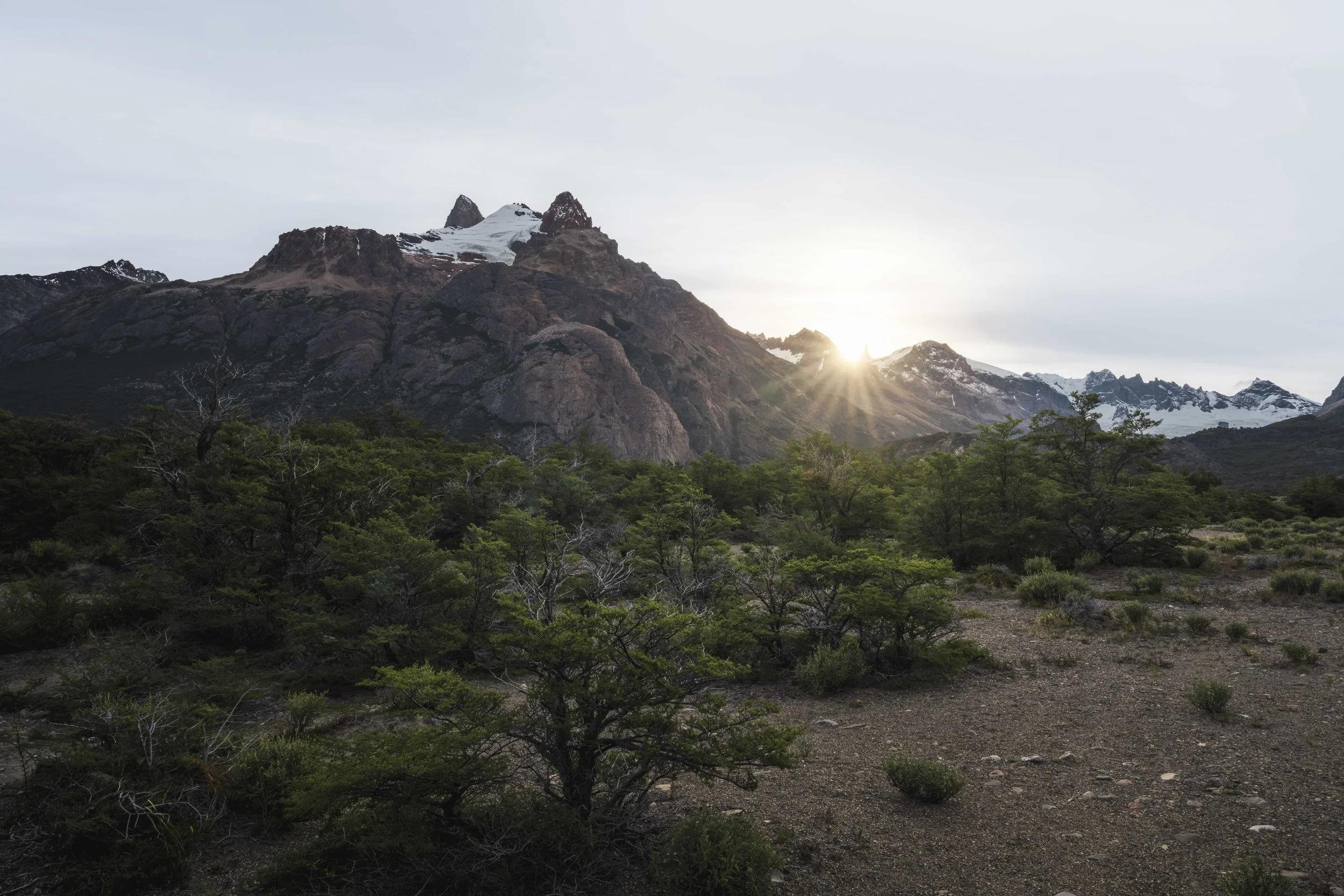
After Antarctica, I didn’t have the energy for that straight away. So instead, we drove out to some of the more accessible viewpoints. Gravel roads, partial views, blocked compositions, the kind of locations where you know the real shot is somewhere further up the trail.
Still, you make the most of what’s in front of you. That first evening, the light softened as the sun dropped behind the ridge. The mountains weren’t fully visible, but the landscape still had something about it, the iconic weathered trees with their bare branches, subtle colours and a sense we were out in the wilderness.
It wasn’t the shots I’d imagined. But it was a start.
Sunrise, Shortcuts, and Small Wins
The next morning, we kept things… realistic. No 4am alarms. No multi-hour hike in the dark. Instead, we drove to a nearby viewpoint for sunrise. And honestly? It wasn’t bad.
We missed that perfect first light, the clouds didn’t quite catch, but once the sun broke through, it lit the landscape just enough. The real challenge wasn’t the light, though. It was the composition.
Foregrounds were tricky. Shadows stretched across the scene. A large bank in front of us limited where we could stand without throwing the whole image off balance. It turned into a morning of experimentation.
Different shrubs. Different angles. Small adjustments to try and make something work.
Some did. Some didn’t. That’s usually how it goes!
When the Plan Goes Out the Window
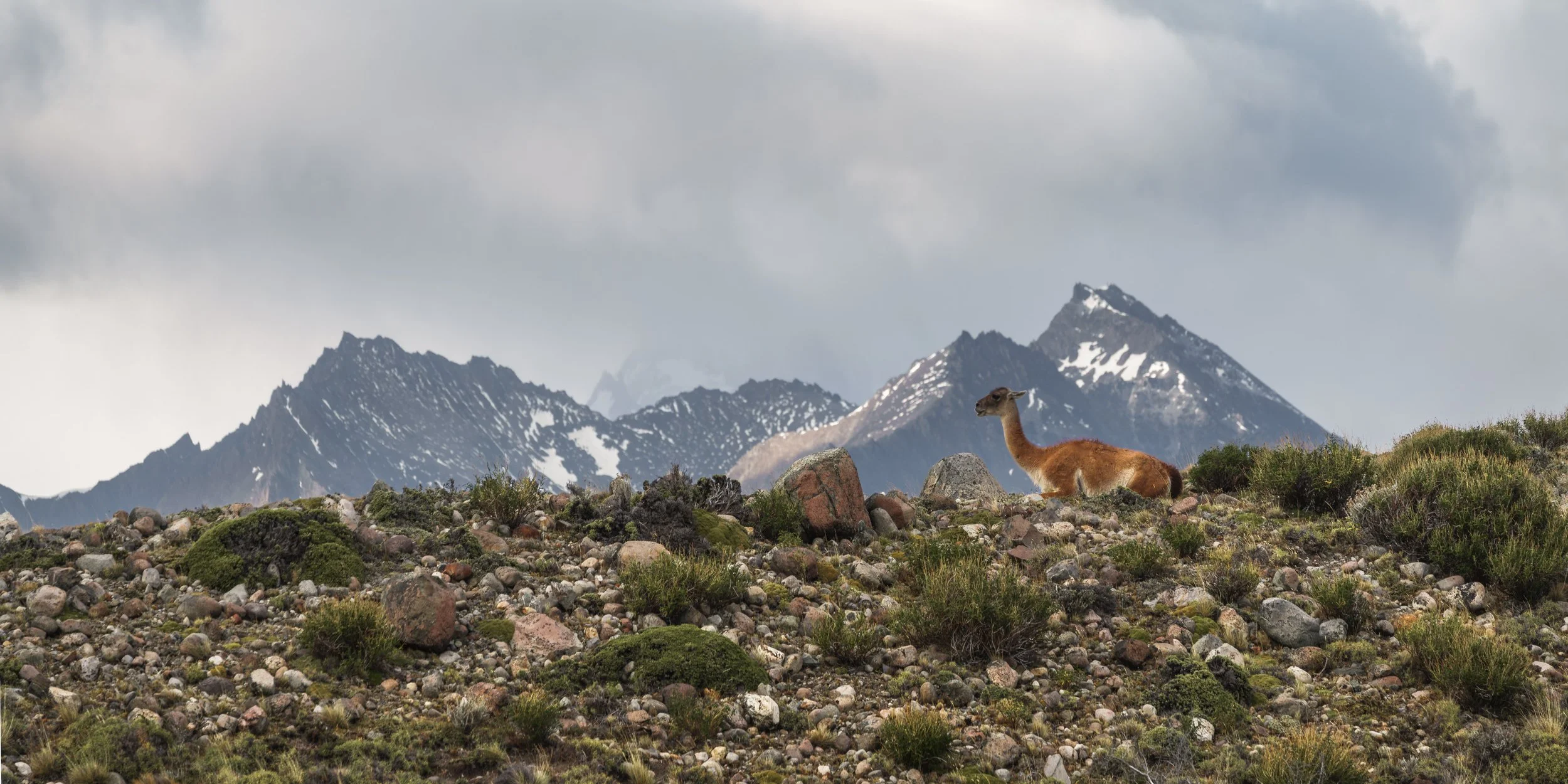
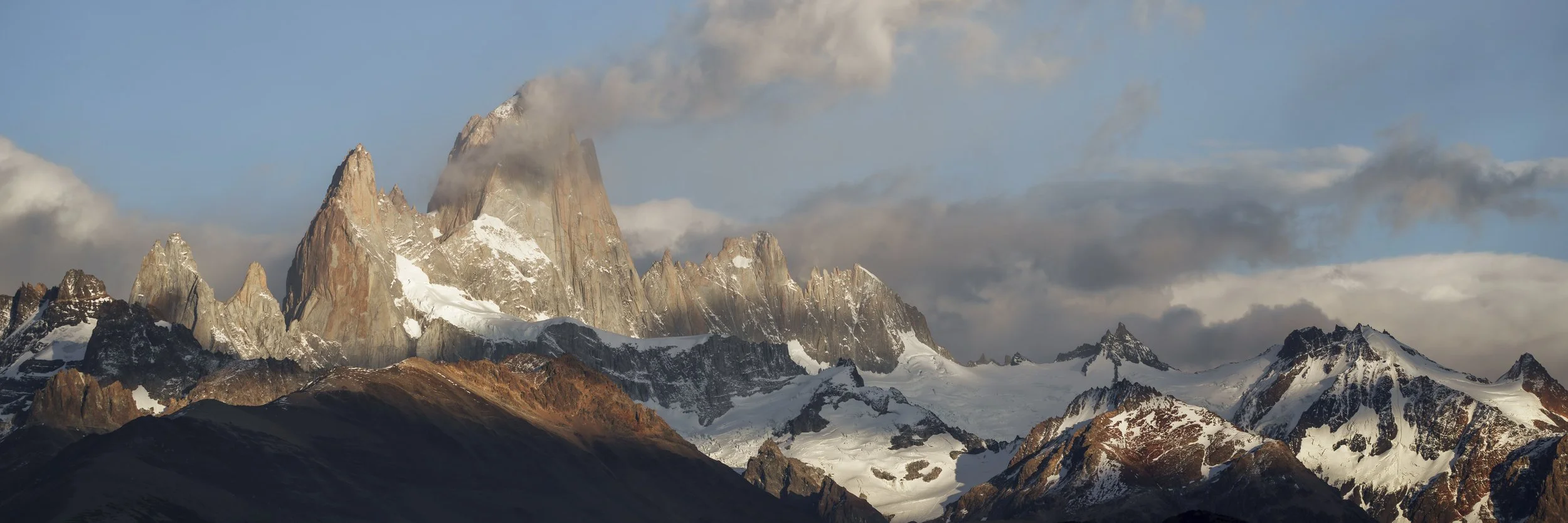
Once I had photographed every shrub at least twice, I swapped lenses to the 100-400mm and started focusing on the peaks themselves. I do love a minimal shot of moody peaks.
Clouds were moving quickly around the mountain tops, a feature of Patagonia being the strong winds! It was one of those moments where you stop chasing a “perfect shot” and just respond to what’s happening in front of you.
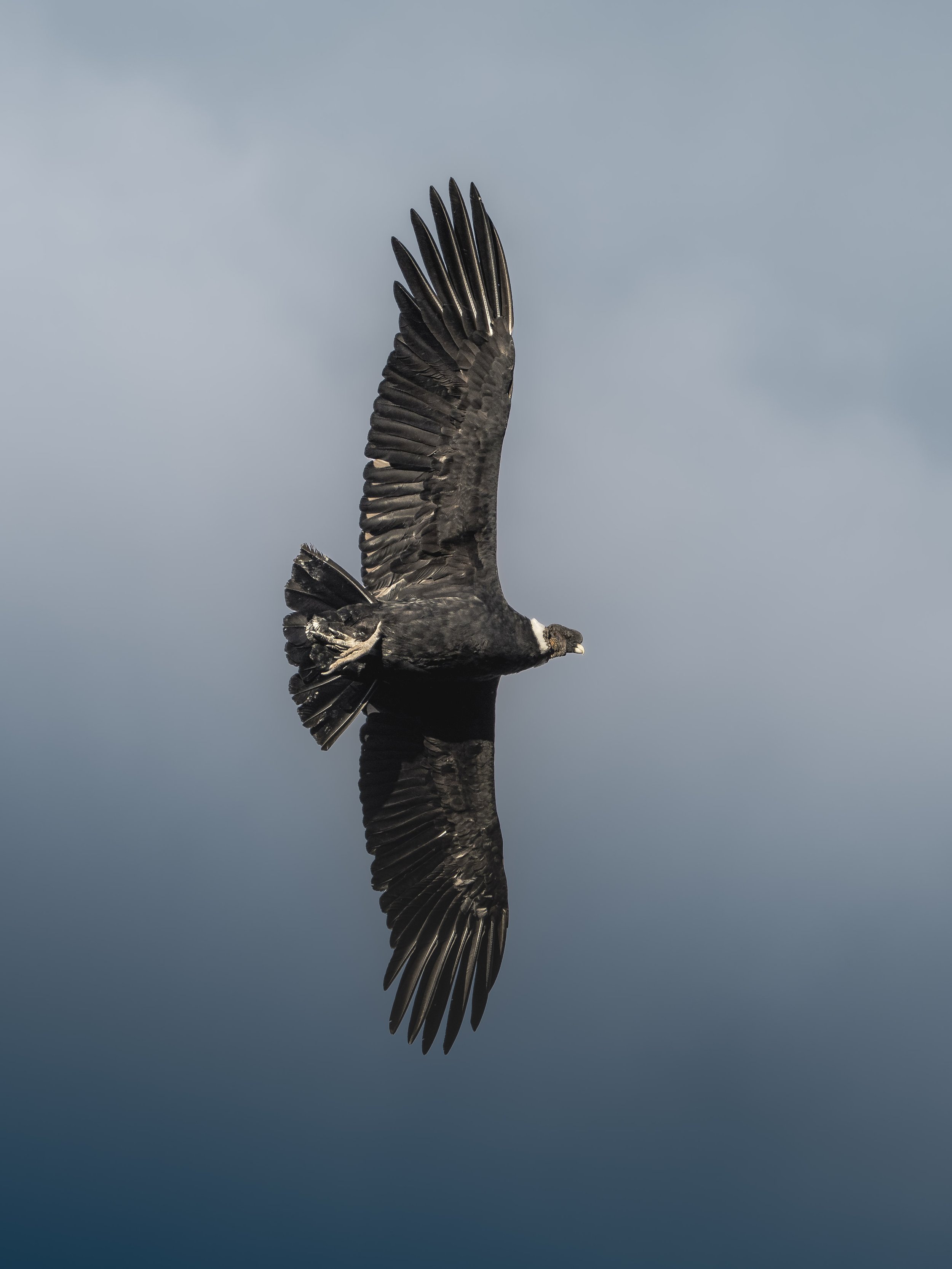
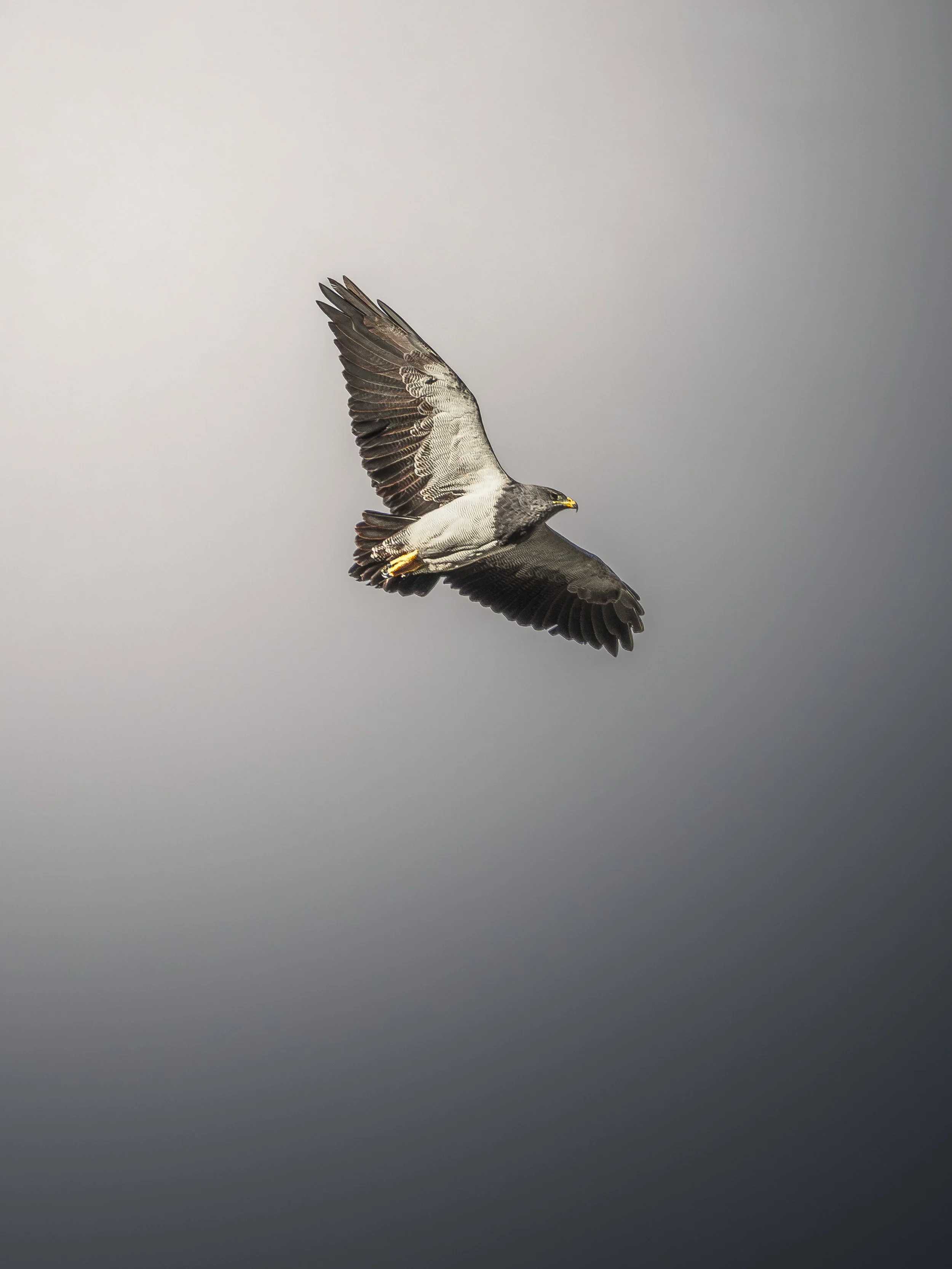
Then a condor flew overhead. And just like that, I forgot about the mountains entirely. My ‘Subject Attention Deficit Disorder’ played up and I was fully in wildlife mode.
Camera settings changed, focus shifted, and for a few minutes it was all about trying to capture this huge bird gliding along the river valley. It wasn’t planned. It wasn’t why I came here, but if I’m going to document an area I need more than a honeypot shot of Fitz Roy
But it ended up being one of the highlights of the morning! That bird was HUGE!! I did wonder for a minute if it wanted to eat me…
Exploring Further South of El Chalten
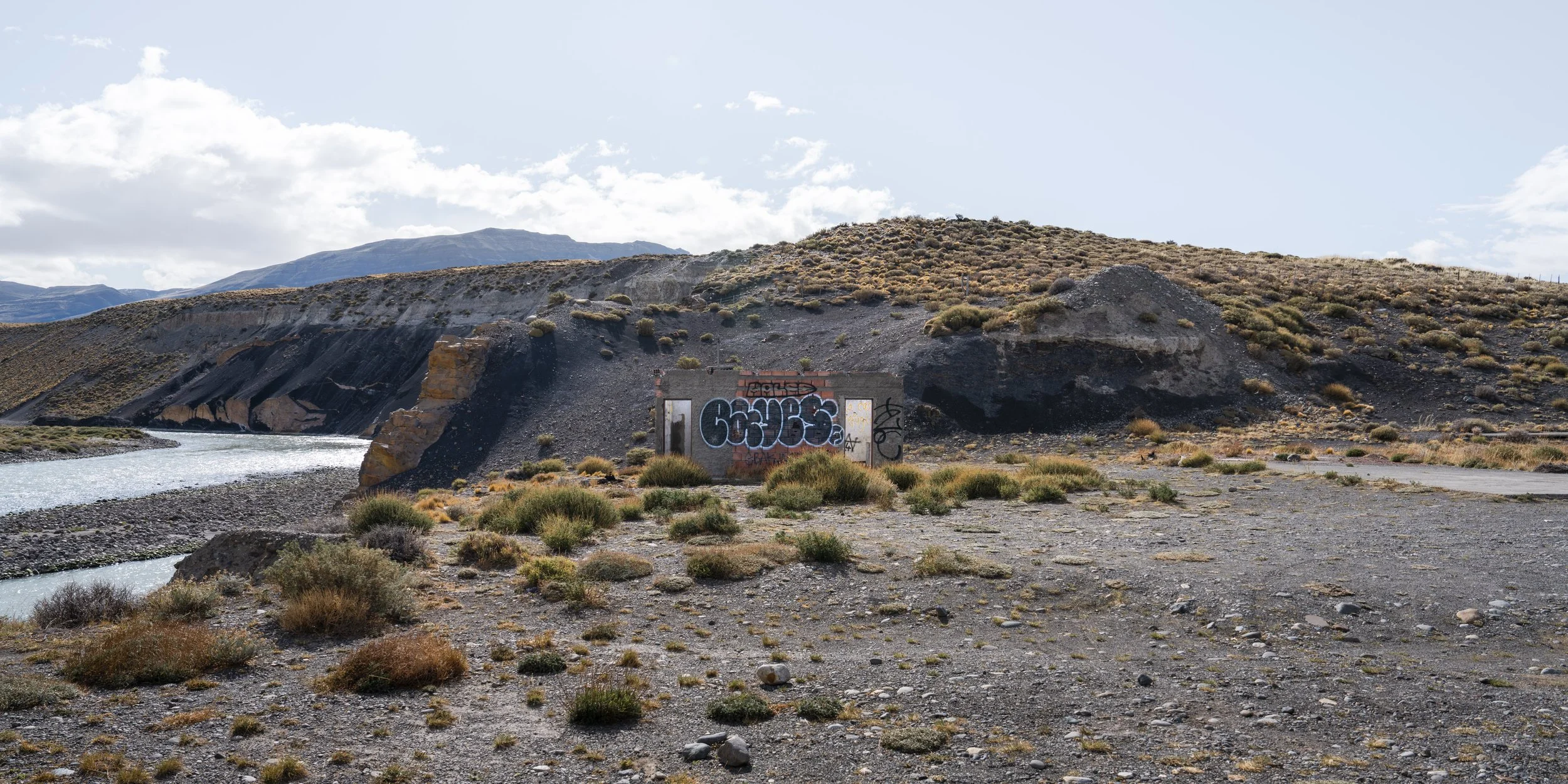
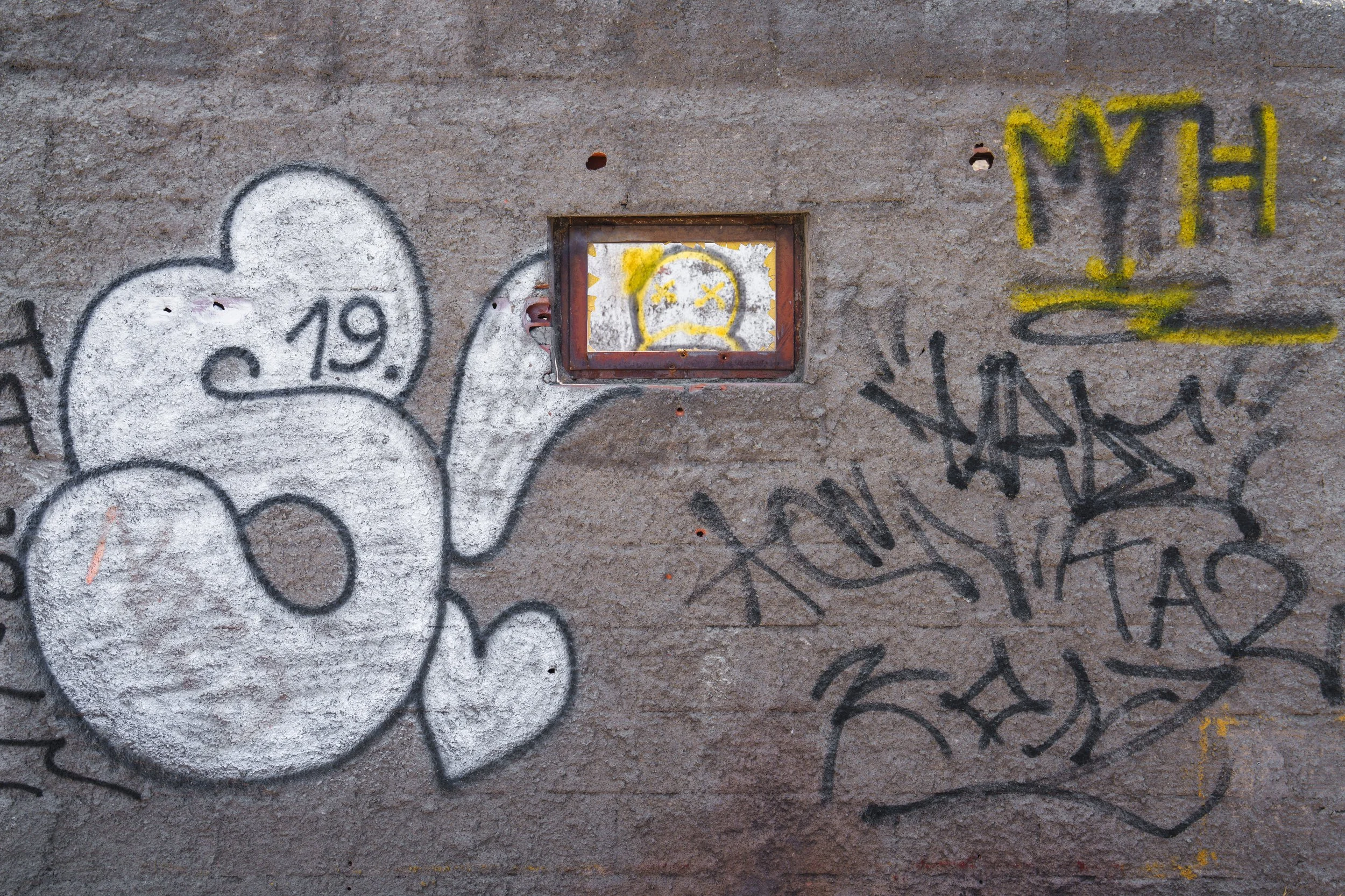
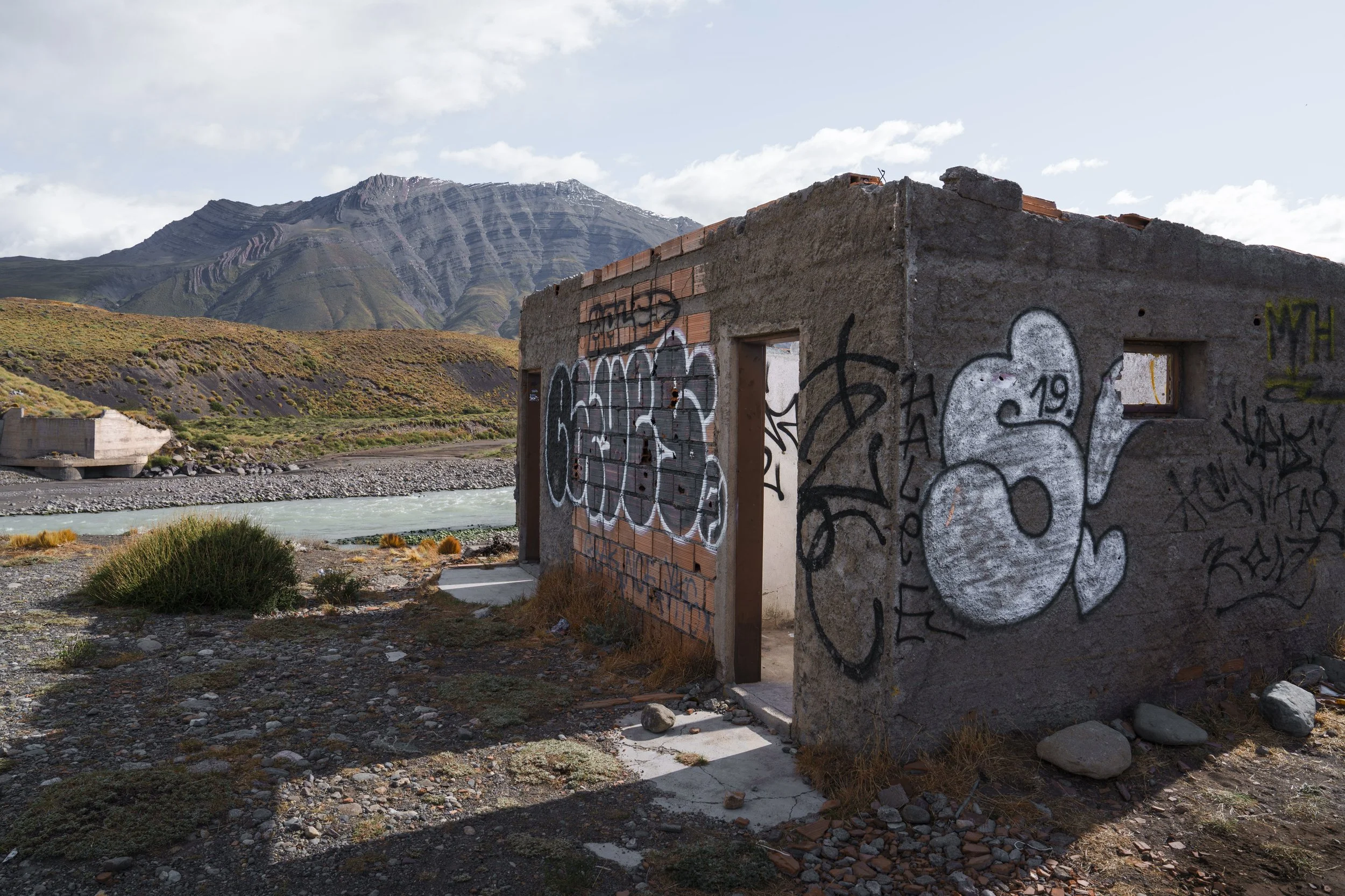
I’m always on the look out for something interesting. Something that’s out of the ordinary and I spotted this odd little building next to the river when we were driving out for sunrise.
On the way back to town, we pulled over and I had a little explore. It looked like a shower block, there were other foundation pads around it indicating other buildings probably existed next to it. Why it was there, no idea, perhaps to support construction of the nearby bridge. Perhaps something from the days before El Chaltén even existed!
The Decision to Finally Hike
By our last full day in El Chaltén, it was obvious. If I really wanted that view of Fitz Roy, I had to earn it… So we went for it.
A few kilometres up towards Lago Capri, the Shimoda backpacks doing their job and staying comfy, still not fully recovered, but committed this time. The trail winds through a lot of woodland at first, with very little visibility of the mountains. You just keep going, hoping the effort will pay off. When we did eventually make it to a clearing, it was still pitch black, couldn’t see if there was a steep drop and the wind was howling!
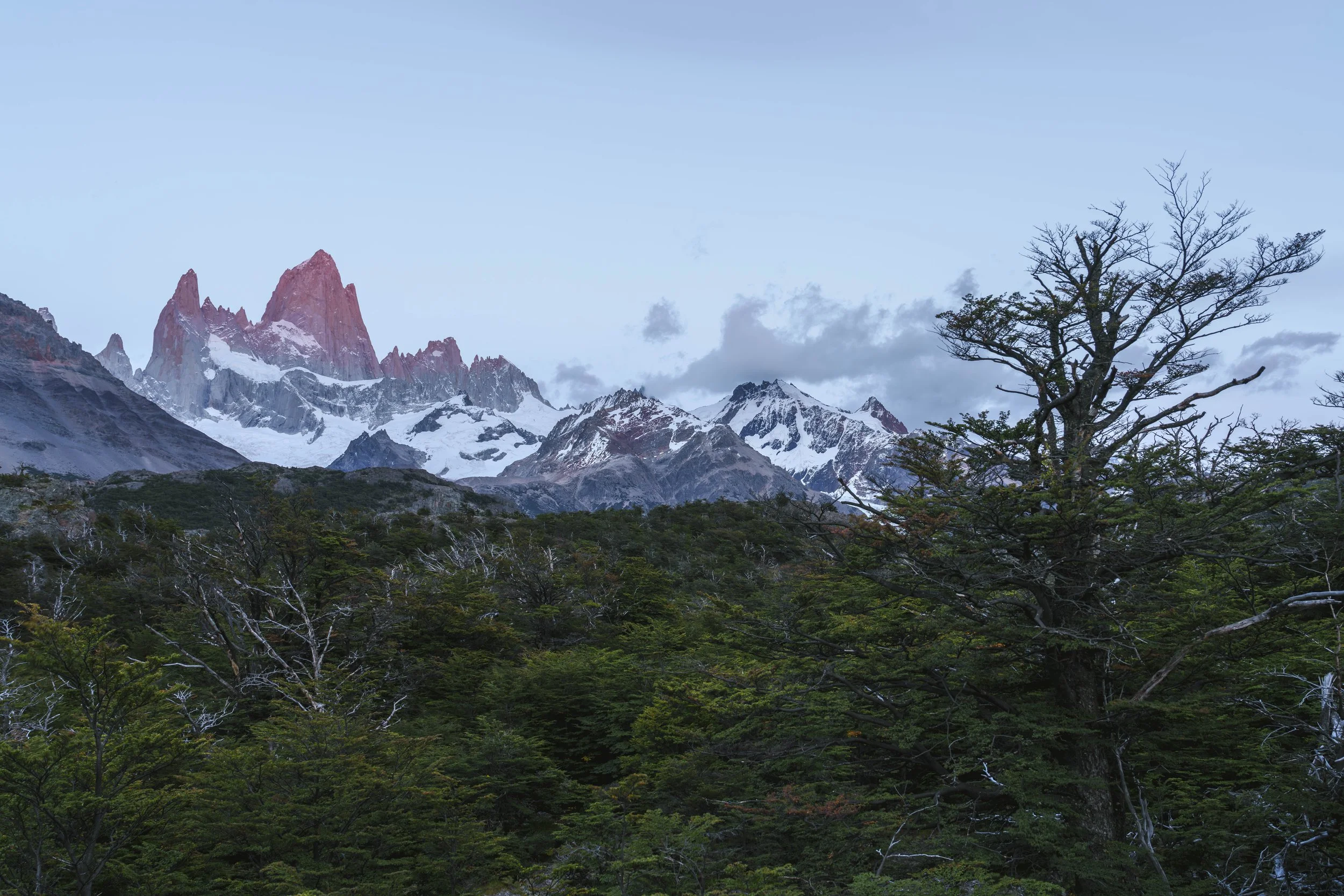
And then, eventually, you crest onto the top of the hill which plagues the view from road north of the Town, and BOOM, you get your first taste of the peaks.
That first glimpse through the trees, just the peaks catching light, was enough to push the rest of the fatigue aside.
Why It Was Worth It
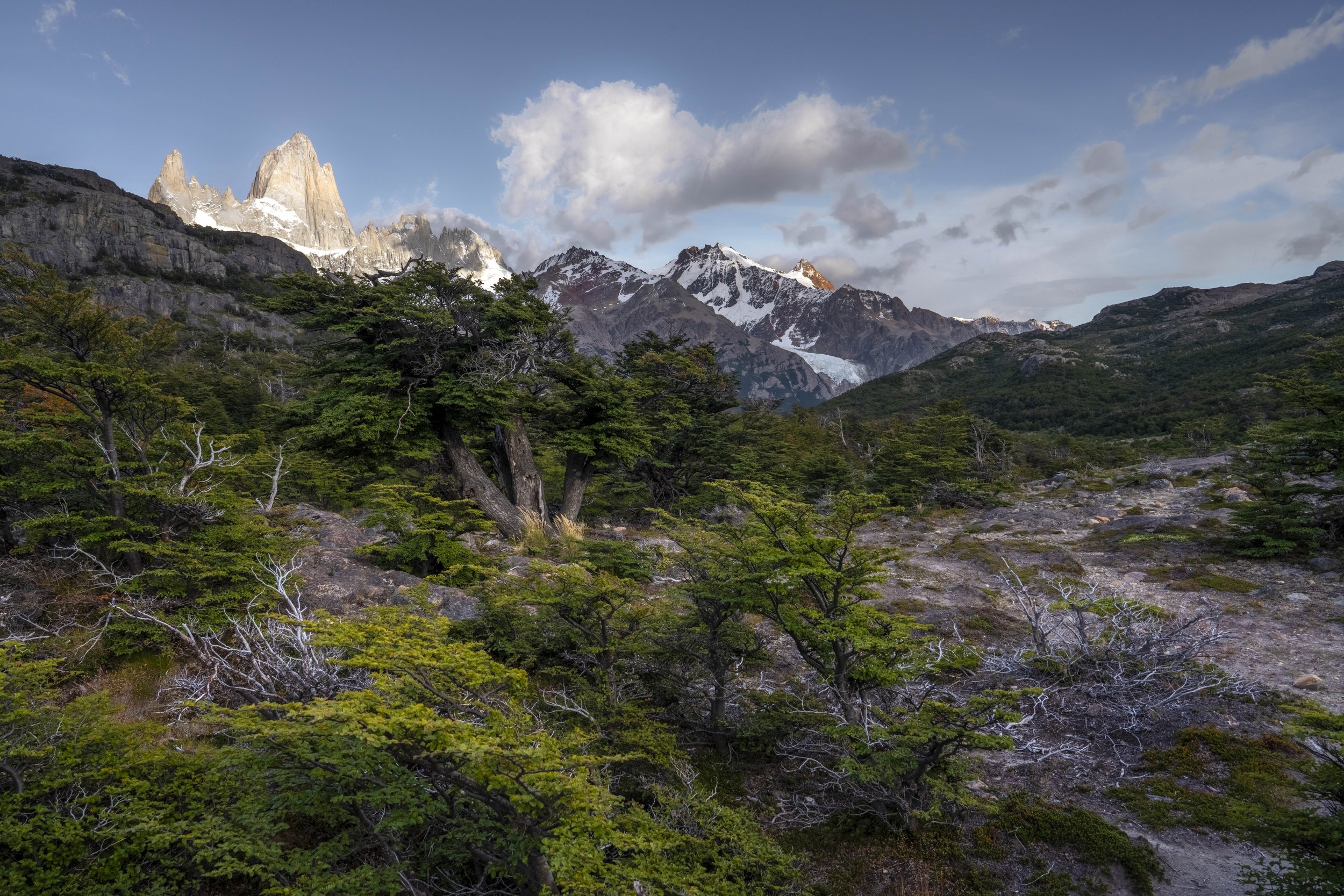
Once we reached the higher ground, everything opened up. Layers started to appear in the landscape. Foreground trees, midground forest, and the mountains rising sharply in the background. Exactly the kind of depth you hope for when shooting somewhere like this.
I didn’t spend much time at the lake itself. The only exposed bits of lakeside were occupied by hikers enjoying the sunrise, and I couldn’t quite find a composition that worked for me. We carried on.
About 20 minutes later, just off the main path, things changed. We had found a little slice of paradise. Fewer people. Better angles. More interesting foregrounds. That’s where I found my rhythm again, back into the organised chaos.
I dropped the bag, picked a direction, and just followed the light. No overthinking, just reacting. It’s that flow state you don’t always get, but when you do, it reminds you exactly why you do this in the first place.
The Shots You Don’t See
It’s easy to look at photos from Patagonia and assume it’s all perfect conditions and endless opportunities. It’s not.
There are crowds. There are clouds that don’t clear. There are compositions that just don’t work no matter how much you try to force them. And yes, there are plenty of photographers who’ve captured this place in better light, better conditions, and probably with more dramatic results.
But that didn’t really matter. Because this trip wasn’t just about the shot. It was about finally being there.
Final Thoughts
El Chaltén had been on my photography bucket list for years. In fact I’d been planning this for 18 months, ever since we decided to go to Antarctica. And while it didn’t unfold exactly how I’d imagined, less hiking at first, more fatigue than expected, it still delivered something better in the end.
Not just images, but perspective. A reminder that photography isn’t always about chasing the most iconic composition or the most perfect conditions. Sometimes it’s about adapting, exploring, and letting the experience shape what you create.
What’s Next
From here, we crossed into Chile and continued the journey to Torres del Paine, another set of mountains I’d been wanting to photograph for a long time.
A different landscape. Different challenges. And, as it turned out, a completely different experience.
That story’s coming next.
In the meantime, why not check out my gallery from El Chalten where you can see more photos from the trip